Como dados de Open Finance transformaram nosso motor de credit scoring
Como usamos dados de Open Finance para enriquecer o credit scoring: extratos bancários, verificação de renda e padrões de gastos — tudo consentido, tudo via API. Por que scoring só com bureaus rejeita 30% dos solicitantes com capacidade de pagamento, e como dados financeiros em tempo real mudam underwriting para sempre.

O problema do credit scoring baseado só em bureaus
O credit scoring tradicional no Brasil depende de duas fontes: Serasa e SPC/Boa Vista. Esses bureaus mantêm bases de dados de eventos negativos — inadimplências, protestos, cheques devolvidos, ações judiciais. Se você tem registros negativos, seu score é baixo. Se não tem, seu score é... genérico.
Essa abordagem binária tem um problema fundamental: ela te diz quem ficou inadimplente no passado, não quem consegue pagar no futuro.
Considere dois solicitantes:
Solicitante A: Sem registros negativos nos bureaus. Score: 750. Parece ótimo no papel. Realidade: ganha R$ 3.000/mês, gasta R$ 2.800/mês, tem R$ 200 de reserva e está pedindo um empréstimo de R$ 50.000. Essa pessoa vai ficar inadimplente.
Solicitante B: Um registro negativo de 2022 (uma conta de telefone de R$ 150 durante uma transição de emprego). Score: 520. Realidade: agora ganha R$ 12.000/mês, gasta R$ 6.000/mês, tem R$ 40.000 de reserva e está pedindo um empréstimo de R$ 20.000. Essa pessoa vai pagar.
Scoring só com bureaus aprova o Solicitante A e rejeita o Solicitante B. Os dados do bureau estão tecnicamente corretos — A não tem negativos, B tem um. Mas a decisão de crédito está errada nos dois casos.
Nossos dados mostram que 30% dos solicitantes rejeitados por scoring só com bureaus são de fato merecedores de crédito quando avaliados com contexto financeiro completo. Isso é receita deixada na mesa, e clientes mal atendidos.
O que Open Finance muda
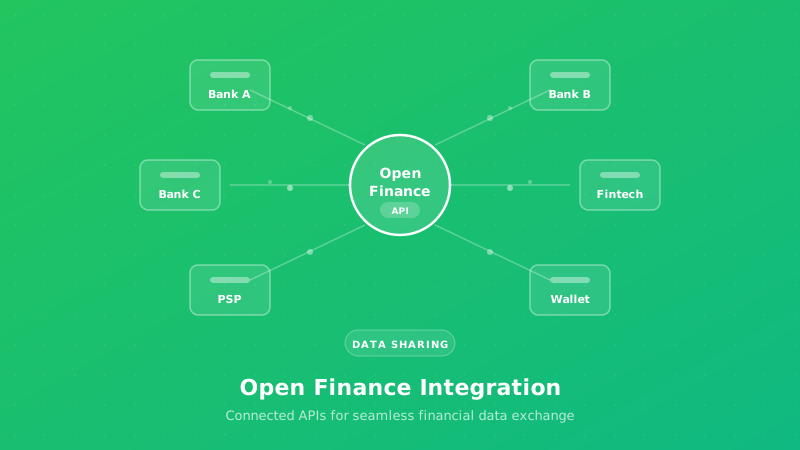
Open Finance (a implementação brasileira de Open Banking, regulada pelo BACEN desde 2021) permite que consumidores e empresas compartilhem seus dados financeiros com terceiros — com consentimento explícito, via APIs padronizadas.
Os dados disponíveis via Open Finance são transformadores:
Extratos bancários (até 12 meses)
Histórico real de transações das contas bancárias do solicitante. Não renda auto-declarada. Não despesas estimadas. Débitos e créditos reais, com nomes de estabelecimentos, categorias e timestamps.
Dos extratos bancários, extraímos:
- Renda líquida: Depósitos reais de salário, renda freelance, renda de aluguel
- Estabilidade de renda: O mesmo valor chega todo mês, ou é volátil?
- Padrões de gastos: Custos fixos (aluguel, contas) vs. gastos discricionários
- Comportamento de poupança: O solicitante acumula ou depleta reservas?
- Serviço de dívida existente: Pagamentos de empréstimos, cartão de crédito, financiamentos
- Timing de fluxo de caixa: Quando o dinheiro entra vs. quando sai?
Saldos de contas
Saldos atuais e históricos em todas as contas que o solicitante compartilha. Isso revela:
- Liquidez: Quanto de caixa está disponível agora?
- Buffer: O solicitante mantém uma margem de segurança?
- Tendências: O saldo está crescendo, estável ou caindo?
Faturas de cartão de crédito
Dados a nível de transação mostrando:
- Ratio de utilização: Quanto do limite está sendo usado?
- Comportamento de pagamento: O solicitante paga total ou mínimo?
- Saldo rotativo: O solicitante está carregando dívida cara?
- Categorias de gastos: Para onde vai o dinheiro?
Empréstimos e financiamentos existentes
Todos os produtos de crédito ativos que o solicitante tem em diferentes instituições:
- Serviço total de dívida: Quanto vai para pagamentos de dívida mensalmente?
- Ratio dívida-renda: O número real, não o auto-declarado
- Histórico de pagamento: Em dia, atrasado ou perdido — por produto
- Prazos remanescentes: Quanto tempo até as dívidas existentes serem pagas?
Como o LoanOS integra dados de Open Finance
Nosso motor de credit scoring, LoanOS, consome dados de Open Finance junto com sinais tradicionais de bureaus. A integração segue uma arquitetura de pipeline:
Passo 1: Consentimento e recuperação de dados
Quando um solicitante pede crédito, é convidado a compartilhar seus dados de Open Finance. O fluxo de consentimento segue as especificações do BACEN:
1. Solicitante seleciona de quais instituições compartilhar dados
2. Solicitante se autentica diretamente com cada instituição (fluxo de redirect)
3. Instituição emite um token de consentimento para a Revenu
4. Revenu recupera dados via APIs padronizadas de Open Finance
5. Dados são criptografados em trânsito e em repouso
O fluxo inteiro de consentimento leva 30-60 segundos. O solicitante nunca compartilha suas credenciais bancárias com a Revenu — a autenticação acontece diretamente com a instituição dele.
Passo 2: Normalização de dados
APIs de Open Finance retornam dados em formatos padronizados (definidos pelo BACEN), mas cada instituição tem particularidades:
- Descrições de transações variam ("PIX ENVIADO" vs. "PIX - TRANSFERENCIA" vs. "PAGAMENTO PIX")
- Códigos de categoria podem diferir
- Formatos de data e tratamento de timezone variam
O LoanOS normaliza todos os dados em um formato canônico antes da análise. Mantemos uma tabela de mapeamento de 2.000+ padrões de descrições de transações para categorias padronizadas.
Passo 3: Extração de features
Dos dados normalizados, o LoanOS extrai 147 features em 8 categorias:
Features de renda (18): Renda líquida mensal (média, mediana, tendência), contagem e diversificação de fontes de renda, volatilidade de renda, detecção de data de salário, identificação de renda de bônus/comissão.
Features de despesas (22): Ratio despesas fixas vs. variáveis, gastos essenciais vs. discricionários, taxa de crescimento de despesas, regularidade de pagamento de contas, ratio aluguel-renda.
Features de fluxo de caixa (19): Fluxo de caixa líquido, volatilidade de fluxo de caixa, contagem de dias abaixo de zero, déficit máximo de caixa, tendência de saldo no fim do mês.
Features de poupança (12): Taxa de poupança, adequação de fundo de emergência, tendência de poupança, presença e crescimento de conta de investimento.
Features de dívida (24): Ratio dívida total-renda, ratio de cobertura de serviço de dívida, ratio de utilização de cartão, percentual de saldo rotativo, número de produtos de crédito ativos, score de pontualidade de pagamento.
Features comportamentais (28): Frequência de transações de apostas, frequência de uso de cheque especial, padrões de empréstimo-para-pagar-empréstimo, saldo da conta antes do salário, aceleração de gastos, padrões de transferência P2P.
Features de estabilidade (14): Idade da conta, duração do relacionamento com banco principal, estabilidade de endereço, estabilidade de emprego.
Sinais de risco (10): Presença de empréstimo consignado, transações em exchanges de criptomoeda, múltiplas solicitações de empréstimo, depósitos grandes repentinos.
Passo 4: Modelo de scoring
O LoanOS roda um modelo ensemble gradient-boosted que combina features de Open Finance com dados tradicionais de bureaus. O modelo produz:
- Credit score (0-1000): Probabilidade de default em 12 meses
- Limite recomendado: Valor máximo de crédito baseado na capacidade de serviço de dívida
- Taxa recomendada: Taxa de juros ajustada ao risco
- Nível de confiança: Quão confiante o modelo está (baseado na completude dos dados)
- Fatores de risco: Top 5 fatores que direcionam o score (para explainability)
O modelo é re-treinado mensalmente com novos dados de performance.
Passo 5: Motor de decisão
O output do modelo alimenta um motor de decisão configurável:
- Auto-aprovação: Score > 700 E dívida-renda < 40% E sem defaults ativos
- Revisão manual: Score 500-700 OU sinais de risco incomuns
- Auto-rejeição: Score < 500 OU defaults ativos > R$ 10.000
- Contra-oferta: Aprovado mas com valor menor ou taxa maior
Regras de decisão são configuráveis por produto, por apetite de risco e por requisito regulatório.
O impacto: bureau-only vs. Open Finance-enriched
Rodamos um teste A/B de 6 meses comparando scoring só com bureaus contra scoring enriquecido com Open Finance no mesmo pool de solicitantes:
Taxa de aprovação
- Bureau-only: 52% de taxa de aprovação
- Open Finance-enriched: 68% de taxa de aprovação
- +16 pontos percentuais — 31% mais solicitantes aprovados
Taxa de default
- Bureau-only: 4,2% de taxa de default em 12 meses
- Open Finance-enriched: 3,1% de taxa de default em 12 meses
- -1,1 ponto percentual — 26% menos defaults apesar de aprovar mais
Como isso é possível?
Mais aprovações E menos defaults parece contraditório. Não é. Scoring só com bureaus é um instrumento grosseiro — ele rejeita muitas pessoas merecedoras de crédito (falsos negativos) enquanto aprova algumas pessoas não merecedoras (falsos positivos). Dados de Open Finance reduzem ambos os tipos de erro simultaneamente:
- Menos falsos negativos: Solicitantes com registros negativos antigos/pequenos mas financeiro atual forte são aprovados
- Menos falsos positivos: Solicitantes com bureau limpo mas padrões de fluxo de caixa ruins são sinalizados
Impacto em receita
Para uma operação de crédito processando 10.000 solicitações por mês:
- 1.600 aprovações adicionais por mês (com risco igual ou melhor)
- Ticket médio: R$ 8.000
- Originação mensal adicional: R$ 12,8 milhões
- Com 3,1% de default vs. 4,2%, a qualidade do portfólio é melhor
Privacidade e consentimento: fazendo do jeito certo
Dados de Open Finance são as informações financeiras mais sensíveis que um cliente pode compartilhar. Tratamos de acordo:
Gestão de consentimento
- Consentimento é granular: o solicitante escolhe quais instituições, quais tipos de dados e por quanto tempo
- Consentimento é revogável: o solicitante pode revogar acesso a qualquer momento pelo app da instituição
- Consentimento tem expiração: máximo 12 meses, após o qual re-consentimento é necessário
- Nunca armazenamos dados brutos de Open Finance além do período de consentimento
Minimização de dados
Extraímos features dos dados brutos e depois descartamos os dados brutos. O modelo de scoring trabalha com features (ex: "score de estabilidade de renda: 0,87"), não com transações brutas (ex: "PIX recebido R$ 5.000 da Empresa X em 5 de março").
Isso significa:
- Um breach exporia vetores de features, não extratos bancários
- Não conseguimos reconstruir o histórico de transações do solicitante a partir de dados armazenados
- Requisições regulatórias de exclusão de dados são diretas
Trilha de auditoria
Cada acesso a dados é logado: quando dados foram recuperados, quais APIs foram chamadas, quais features foram extraídas, como o score foi calculado, qual decisão foi tomada. Essa trilha satisfaz os requisitos de auditoria de Open Finance do BACEN e as obrigações de transparência da LGPD.
Solicitantes sem Open Finance: degradação graceful
Nem todo solicitante vai compartilhar dados de Open Finance. Alguns não têm uma instituição participante. Alguns não confiam no processo. Alguns não têm smartphone.
O LoanOS lida com isso graciosamente:
- Com dados de Open Finance: Modelo completo de 147 features, maior precisão
- Sem dados de Open Finance: Modelo bureau-only com 23 features, menor precisão mas ainda funcional
- Dados parciais: Se o solicitante compartilha dados de uma instituição mas não de outras, o modelo usa o que está disponível e ajusta níveis de confiança
O sistema nunca requer dados de Open Finance. Sempre melhora com eles.
Os números de produção
Após 12 meses de scoring enriquecido com Open Finance:
- 147 features extraídas de dados de Open Finance
- 68% taxa de aprovação (vs. 52% bureau-only)
- 3,1% taxa de default (vs. 4,2% bureau-only)
- 30% dos solicitantes previamente rejeitados agora aprovados com bom desempenho
- < 2 segundos da recuperação de dados ao cálculo do score
- R$ 153 milhões em volume adicional de originação (solicitantes que teriam sido rejeitados)
- Zero data breaches — extração de features, não armazenamento de dados brutos
- 89% taxa de consentimento — quando solicitantes entendem o benefício, a maioria opta por compartilhar
Por que isso importa
O mercado de crédito no Brasil tem 70 milhões de adultos que são "invisíveis" para bureaus tradicionais — não têm histórico de crédito, não têm score e não têm como provar sua capacidade creditícia. Open Finance muda isso ao permitir que pessoas provem sua saúde financeira com dados reais, não apenas com a ausência de registros negativos.
Para credores, Open Finance é vantagem competitiva: aprovar mais, perder menos e servir clientes que concorrentes não conseguem alcançar.
Para solicitantes, Open Finance é inclusão financeira: acesso a crédito baseado em quem você é hoje, não no que aconteceu anos atrás.
Construímos essa integração porque acreditamos que decisões de crédito devem ser baseadas nos melhores dados disponíveis, não em sistemas legados que foram projetados antes de smartphones existirem. Open Finance é esse dado. E muda tudo.