ISO 20022: o futuro da mensageria financeira no Brasil — e por que camadas de tradução são dívida técnica
Por que escolhemos construir ISO 20022 nativamente — não como camada de tradução. 19 tipos de mensagens nativas, preparação para migração SWIFT, pacs.008 para transferências de crédito, camt.053 para extratos, e o que isso significa para fintechs brasileiras construindo infraestrutura de pagamentos cross-border.

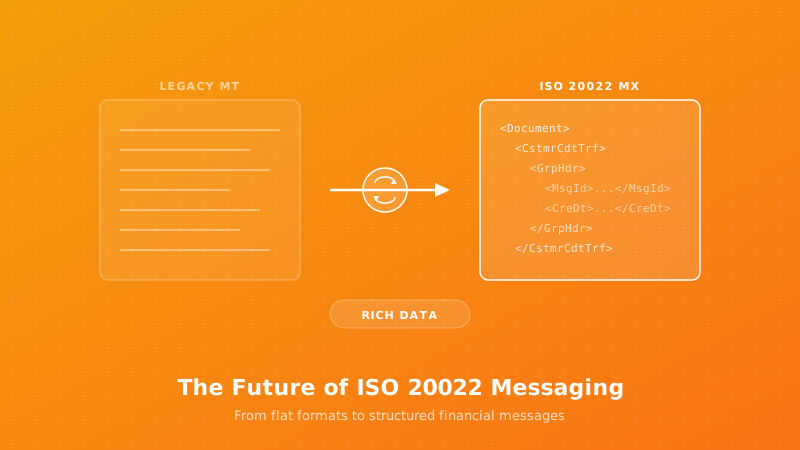
O que é ISO 20022 — e por que você deveria se importar?
ISO 20022 é o padrão global de mensageria financeira. Ele substitui décadas de formatos proprietários — MT103, CNAB 240, mensagens STR — por mensagens estruturadas em XML e ASN.1 que carregam 10x mais informação que seus predecessores.
Mas aqui está o que a maioria das pessoas não percebe: ISO 20022 não é apenas um "formato melhor." É uma reimaginação completa de como sistemas financeiros se comunicam. Uma mensagem MT103 de transferência legacy carrega cerca de 15 campos de dados. Um pacs.008 do ISO 20022 carrega mais de 100 campos estruturados — incluindo informações de remessa, dados de reporting regulatório, detalhes de cadeia de intermediários e códigos de propósito.
Isso importa porque mensagens ricas em dados habilitam automação que antes era impossível. Reconciliação, screening de compliance, detecção de fraude e reporting regulatório se tornam dramaticamente mais fáceis quando cada pagamento carrega seu contexto completo.
A linha do tempo da migração global
O mundo está migrando para ISO 20022. Isso não é opcional.
- SWIFT: Migração completa até novembro de 2025. Após essa data, todos os pagamentos cross-border na rede SWIFT devem usar ISO 20022 (mensagens MX). Mensagens MT legacy estão sendo descontinuadas.
- UE (TARGET2/EURO1): Migrado em março de 2023. Todos os pagamentos em euro na Europa já usam ISO 20022.
- UK (CHAPS): Migrado em junho de 2023.
- EUA (Fedwire): Migração programada para março de 2025.
- Brasil (SPI/PIX): Já é nativo ISO 20022. O PIX foi construído sobre ISO 20022 desde o primeiro dia. O SPI (Sistema de Pagamentos Instantâneos) usa pacs.008 e pacs.002 nativamente.
- Brasil (STR): O BACEN está progressivamente migrando o STR (Sistema de Transferência de Reservas) para ISO 20022.
Se você está construindo infraestrutura financeira hoje e não está construindo sobre ISO 20022, você está criando dívida técnica que vai custar milhões para remediar em 2-3 anos.
Por que a maioria das implementações erra: a armadilha da camada de tradução
Eis como 90% das fintechs e bancos "adotam" ISO 20022:
1. Eles têm um sistema existente construído sobre formatos proprietários (CNAB 240, JSON customizado, mensagens MT legacy)
2. Reguladores ou parceiros exigem ISO 20022
3. Eles constroem uma camada de tradução na borda — um middleware que converte o formato interno para ISO 20022 na saída e ISO 20022 para o formato interno na entrada
Parece pragmático. Na verdade é catastrófico.
Por que camadas de tradução falham
Perda de dados na entrada. Uma mensagem pacs.008 entrante contém 100+ campos. Sua camada de tradução mapeia para o seu schema interno que tem 20 campos. Os outros 80 campos? Descartados. Quando você precisar deles depois — para reporting regulatório, para screening de compliance, para resolução de disputas — eles se foram. Você não consegue reconstruir dados que foram jogados fora na porta de entrada.
Fabricação de dados na saída. Seu sistema interno gera um pagamento com 20 campos. Sua camada de tradução precisa produzir um pacs.008 com 100+ campos. De onde vêm os outros 80? Ou ficam vazios (o que pode violar regras do schema) ou são preenchidos com valores default (que podem estar errados). Você está enviando mensagens que parecem ISO 20022-compliant mas carregam dados fabricados.
Inferno de versionamento de schemas. Schemas ISO 20022 evoluem. pacs.008.001.08 é diferente de pacs.008.001.10. Quando o SWIFT ou BACEN atualiza a versão do schema, cada regra de tradução no seu middleware precisa ser atualizada. Isso é um processo manual, propenso a erros, que cria um imposto permanente no seu time de engenharia.
Gaps de reconciliação. Seu sistema interno pensa em formatos proprietários. Suas interfaces externas pensam em ISO 20022. Quando algo dá errado — um pagamento falho, uma disputa, uma auditoria — você precisa mapear entre as duas representações. Esse mapeamento é com perda, ambíguo e frágil.
Risco de compliance. Reguladores cada vez mais esperam dados ISO 20022 na sua forma nativa para reporting. Se seu sistema de compliance trabalha com dados traduzidos, você está reportando aproximações, não fatos.
Como a Revenu constrói ISO 20022 nativamente
Nós fizemos uma escolha diferente. Em vez de traduzir na borda, geramos mensagens ISO 20022 internamente — a partir do event store, do ledger, do motor de pagamentos. ISO 20022 não é nosso formato de saída. É nosso formato de pensamento.
Os 19 tipos de mensagens que suportamos nativamente
Iniciação de pagamentos (família pain):
pain.001— Iniciação de transferência de crédito do clientepain.002— Relatório de status de pagamento do clientepain.008— Iniciação de débito direto do cliente
Compensação e liquidação (família pacs):
pacs.002— Relatório de status de pagamento (FI para FI)pacs.003— Débito direto de cliente FI para FIpacs.004— Devolução de pagamentopacs.008— Transferência de crédito de cliente FI para FIpacs.009— Transferência de crédito de instituição financeirapacs.028— Solicitação de status de pagamento FI para FI
Gestão de caixa (família camt):
camt.029— Resolução de investigaçãocamt.052— Relatório de conta intraday (banco para cliente)camt.053— Extrato de conta fim de dia (banco para cliente)camt.054— Notificação de débito/crédito (banco para cliente)camt.056— Solicitação de cancelamento de pagamento FI para FIcamt.060— Solicitação de reporting de conta
Autorização (família auth):
auth.001— Abertura de solicitação de informaçãoauth.002— Resposta a solicitação de informação
Administração (família admi):
admi.002— Notificação de eventoadmi.004— Notificação de evento do sistema
Cada um desses tipos de mensagens é gerado diretamente a partir dos nossos eventos de domínio. Quando um pagamento é iniciado, o evento de domínio contém todos os dados necessários para produzir um pacs.008 completo e válido — sem tradução, sem fabricação, sem perda de dados.
Como funciona: de evento de domínio para mensagem ISO 20022
Quando um pagamento PIX é processado na Revenu, eis o que acontece:
1. Evento de domínio emitido: PaymentInitiated com contexto completo — devedor, credor, valor, moeda, propósito, informações de remessa, dados regulatórios
2. Evento armazenado: O evento é persistido no event store com seu payload completo (Event Sourcing)
3. Projeção ISO 20022: Um projetor do lado de leitura gera a mensagem pacs.008 diretamente a partir dos dados do evento. Sem tradução — o evento já contém cada campo que a mensagem precisa
4. Transmissão SPI: O pacs.008 é enviado ao SPI do BACEN para liquidação PIX
5. Tratamento de resposta: O pacs.002 (relatório de status) do SPI é recebido, parseado nativamente e armazenado como evento de domínio
6. Atualização do ledger: O lançamento contábil é criado a partir do mesmo evento, com referências ISO 20022 embutidas
A sacada-chave: o evento de domínio e a mensagem ISO 20022 são semanticamente equivalentes. Não precisamos de camada de tradução porque nossa representação interna já fala ISO 20022.
PIX e ISO 20022: a vantagem do Brasil
Eis algo que a comunidade fintech global não aprecia totalmente: o PIX do Brasil é a implementação ISO 20022 mais avançada do mundo.
Quando o BACEN projetou o PIX em 2020, tomou uma decisão que a maioria dos bancos centrais não tomou: construir sobre ISO 20022 do zero, não retroadaptar em cima de infraestrutura legacy.
O SPI (Sistema de Pagamentos Instantâneos) usa:
pacs.008para transferências de crédito (o pagamento PIX de fato)pacs.002para relatórios de status (confirmação/rejeição)pacs.004para devoluções (MED, reembolsos)camt.053para extratos de fim de diacamt.054para notificações de débito/crédito em tempo real
Isso significa que cada pagamento PIX no Brasil — mais de 40 bilhões de transações por ano — é uma mensagem ISO 20022. Fintechs brasileiras que constroem sobre ISO 20022 nativamente têm uma vantagem sobre competidores globais que ainda estão migrando.
A Revenu processa mensagens PIX nativamente. Não recebemos uma notificação PIX e traduzimos para algum formato interno. O pacs.008 do SPI é nossa representação interna. Parseamos, armazenamos, consultamos e reportamos na sua estrutura ISO 20022 nativa.
Pagamentos cross-border: onde ISO 20022 nativo vira vantagem competitiva
O verdadeiro retorno do ISO 20022 nativo vem quando você cruza fronteiras.
SWIFT gpi e ISO 20022
A iniciativa gpi (global payments innovation) do SWIFT exige que todos os pagamentos cross-border usem ISO 20022 até novembro de 2025. Bancos que ainda usam MT103 internamente precisarão:
1. Receber o pacs.008 do SWIFT
2. Traduzir para o formato MT interno (perdendo dados)
3. Processar o pagamento internamente
4. Traduzir de volta para ISO 20022 para o próximo hop (fabricando dados)
Cada tradução introduz latência, perda de dados e risco de erro. Para um pagamento que cruza 3 bancos intermediários, são 6 traduções — cada uma um ponto de falha potencial.
A Revenu processa o pacs.008 nativamente. Zero traduções. Zero perda de dados. A mensagem flui pelo nosso sistema com seus 100+ campos intactos, do ingresso ao ledger à saída.
Informações de remessa: a killer feature
As informações de remessa estruturadas do ISO 20022 são transformadoras para pagamentos cross-border. Um pacs.008 pode carregar:
- Números de notas fiscais
- Identificação tributária
- Referências de contrato
- Códigos de propósito (salário, comércio, investimento)
- Códigos de reporting regulatório
Esses dados habilitam processamento direto (STP) — pagamentos que podem ser reconciliados, screenados e liquidados sem intervenção humana. Mensagens MT legacy forçam reconciliação manual porque o campo 70 (informações de remessa) é um campo de texto livre.
Para empresas brasileiras recebendo pagamentos internacionais, ISO 20022 nativo significa:
- Reconciliação automática contra notas fiscais
- Reporting automático ao BACEN com códigos de propósito estruturados
- Screening de compliance automático com contexto completo de remetente/destinatário
- Zero intervenção manual para pagamentos comerciais padrão
Extratos bancários: camt.053 vs. CNAB 240
Bancos brasileiros ainda distribuem extratos em formato CNAB 240 — um formato de texto posicional de largura fixa projetado nos anos 90. Funciona. Também é terrível.
Limitações do CNAB 240:
- Campos de largura fixa truncam dados (nomes, endereços, descrições)
- Sem informações de remessa estruturadas
- Sem detalhes de conversão de moeda para transações internacionais
- Sem informação de cadeia de bancos intermediários
- Mudanças de versão são comunicadas via documentos PDF, não schemas legíveis por máquina
O camt.053 do ISO 20022 resolve tudo isso:
- Campos XML de comprimento variável — sem truncamento
- Dados de remessa estruturados por transação
- Detalhes completos de conversão de moeda (taxa de câmbio, valor instruído, valor convertido)
- Cadeia completa de intermediários para pagamentos cross-border
- Schemas XSD legíveis por máquina com versionamento formal
A Revenu gera camt.053 nativamente. Para clientes que ainda precisam de CNAB 240 (integração com ERP legacy), traduzimos de ISO 20022 para CNAB 240 — não o contrário. A fonte de verdade é sempre ISO 20022.
Reporting regulatório: CADOC e ISO 20022
Os requisitos de reporting CADOC do BACEN estão evoluindo na direção da semântica ISO 20022. À medida que o BACEN moderniza sua infraestrutura de reporting, instituições que já operam em ISO 20022 internamente terão uma vantagem significativa de compliance.
A geração de CADOC da Revenu já aproveita estruturas de dados ISO 20022. Quando geramos um relatório CADOC, estamos montando a partir de eventos ISO 20022 nativos — não traduzindo de formatos proprietários. Isso significa:
- Maior qualidade de dados em relatórios regulatórios
- Adaptação mais rápida a mudanças de schema do BACEN
- Alinhamento automático com futuras modernizações do CADOC
A arquitetura técnica: ISO 20022 em um sistema Event Sourcing
Nossa implementação ISO 20022 é profundamente integrada com nossa arquitetura Event Sourcing:
Eventos como mensagens
Cada evento de domínio no event store da Revenu mapeia para um ou mais tipos de mensagem ISO 20022. O mapeamento não é uma tradução — é uma projeção. O evento contém um superset dos dados necessários para a mensagem ISO 20022.
PaymentInitiated → pacs.008
PaymentConfirmed → pacs.002 (ACCP)
PaymentRejected → pacs.002 (RJCT)
PaymentReturned → pacs.004
StatementGenerated → camt.053
Validação de schema
Cada mensagem ISO 20022 gerada pela Revenu é validada contra os schemas XSD oficiais antes da transmissão. Mensagens inválidas são capturadas em build time, não em produção. Rodamos validação de schema como parte do nosso pipeline de CI/CD.
Versionamento
Suportamos múltiplas versões de schema simultaneamente. Quando o BACEN ou SWIFT atualiza uma versão de schema, adicionamos a nova versão junto à existente. Ambas as versões são geradas a partir dos mesmos eventos de domínio. A migração é gradual — trocamos versões de saída por canal, não por deployment.
Os números de produção
Após 18 meses de ISO 20022 nativo em produção:
- 19 tipos de mensagens gerados nativamente
- Zero camadas de tradução no caminho de pagamentos
- < 3ms tempo médio de geração de mensagens (evento para XML válido)
- 100% validação de schema — nenhuma mensagem inválida enviada ao SPI ou SWIFT
- Zero perda de dados — cada campo do ingresso é preservado através do sistema
- 4 versões de schema suportadas simultaneamente (pacs.008.001.08 até .11)
- 40M+ mensagens ISO 20022 geradas por mês
O que isso significa para fintechs brasileiras
Se você está construindo infraestrutura financeira no Brasil hoje, você tem uma escolha:
Opção A: Construir sobre formatos proprietários e adicionar camadas de tradução ISO 20022 depois. Isso é mais rápido para começar mas cria dívida técnica permanente. Cada novo parceiro, cada nova regulação, cada expansão cross-border vai exigir novas regras de tradução. Cada regra de tradução é um ponto de falha. Cada ponto de falha é um risco regulatório.
Opção B: Construir sobre ISO 20022 desde o dia um. Isso exige mais trabalho de design upfront mas paga dividendos para sempre. Seu sistema fala a mesma língua que o BACEN (PIX/SPI), SWIFT (cross-border) e a UE (TARGET2). Sem tradução. Sem perda de dados. Sem imposto de middleware.
Nós escolhemos a Opção B quatro anos atrás. Cada dia desde então validou essa decisão.
O sistema financeiro global está convergindo em ISO 20022. A questão não é se sua plataforma vai precisar suportá-lo — é se você vai construí-lo nativamente ou passar a próxima década mantendo camadas de tradução.
Nós construímos nativamente. E nunca olhamos para trás.